Future of Work
What actually changes when the software starts answering
A small business runs on tasks it means to get round to. Why the ones that never happen cost the most, and a five-day count any owner can run.
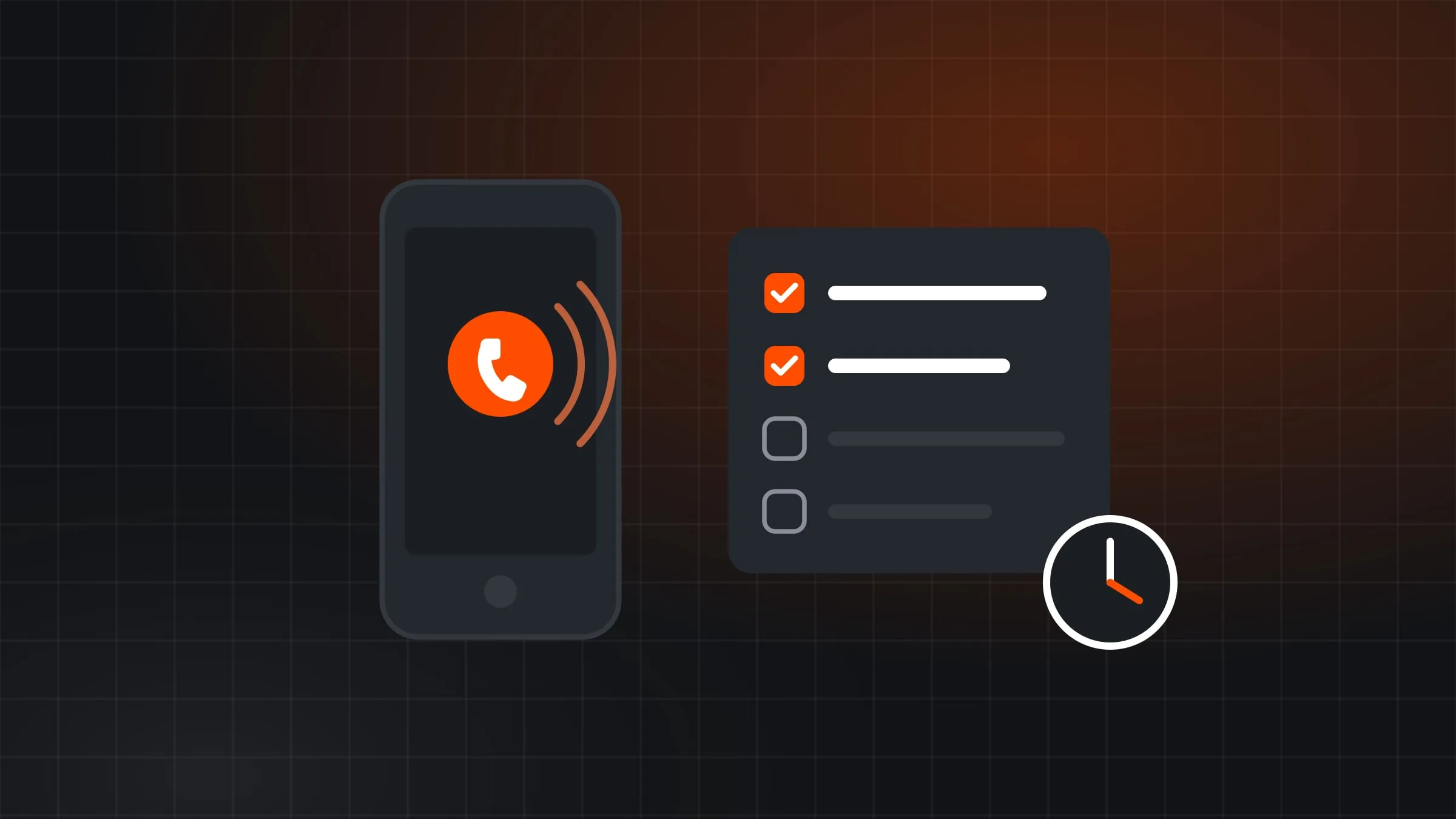
A small business runs on deferred tasks. There is the callback you will make when the current job is finished, the quote you will send when things quieten down, and the enquiry you meant to come back to. Most of them get done. The ones that do not are the expensive ones, and nobody ever sees the bill.
The work that never happens
Some of those tasks never happen at all. Nobody decided against them. The moment passed, and nothing in the business recorded that the moment existed.
That is the part worth thinking about. Work that gets done badly is visible: someone notices, someone complains, someone fixes it, and the cost can be counted. Work that never happens leaves no trace. There is no complaint from a customer who rang once, got no answer and rang someone else. There is no line on the accounts for a quote that was never chased. So it is never counted, and it is never fixed.
Why it happens to good businesses
None of this comes from laziness. It comes from the shape of the work.
At Manchester PC (opens in a new tab), the phone rings while we are with a customer, under a desk or halfway through a repair. There are two choices, and both cost something. Stop the job and answer, and the work in front of you suffers. Let it ring, and the person calling may not try again.
Anyone who does the work themselves lives with the same trade. The job in front of you always feels more urgent than the one that might be on the phone, and most of the time that is the right call. But “I’ll ring them back later” quietly becomes a task, and tasks like that are the first to fall off a busy day.
What changed when we stopped answering in the moment
For several months now, an AI voice agent has answered our phone. I have written up what three months of it taught us, including the parts that went wrong, so I will not repeat the detail here.
The biggest benefit was not the cost saving. It was that the deferred task stopped being deferred. Every call now leaves a record: who rang, what they wanted, how to reach them. Instead of a callback living in someone’s memory, it sits in a list that we work through once the job in hand is done.
We stopped being interrupted all day. We review what was collected and decide which enquiries need a call back and which can be handled by text or email. For a small business, that is a big difference in how the day feels.
It has not been free of cost. Our conversion rate dropped over the same period, and I do not yet know how much of that the agent caused. A record of every enquiry is only useful if someone acts on it, and a person still decides which ones need a call.
The point is not the software
Software that answers is one way to make the invisible work visible. It is not the only way, and for many businesses it is not the first one to try.
The real shift is from relying on memory to relying on a record. A notebook by the phone does that. So does a shared inbox that one person checks at set times, or a voicemail greeting that tells callers exactly when they will hear back, followed by someone who keeps that promise. None of those cost anything, and each of them turns a task that might quietly disappear into one that someone can see.
What software adds is consistency on the days nobody has time to write anything down. In a small business, those are most days.
A count worth doing this week
Before deciding whether any of this matters to you, find out how big the invisible pile is. For five working days, keep one line for every enquiry that comes in, whatever the channel: the time it arrived and the time someone first replied. Leave a gap where nobody replied.
At the end of the week, count the gaps. Most owners have a feeling about how many enquiries slip through. Very few have a number, and the number is what tells you whether to change anything at all.
If you try it, I would be interested to hear what the count turned up.